





Nov
FOR YOUR INFORMATION
The Historical Origins of Agarwood, Buddhist Practice, and Modern Inheritance
Through more than two thousand years, Agarwood has evolved from a rare exotic commodity to a symbol of elegance, meditation, and cultural renewal
The Historical Origins of Agarwood
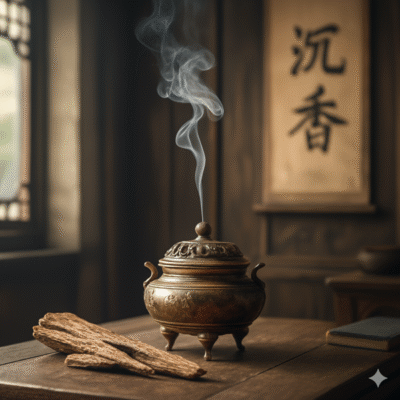
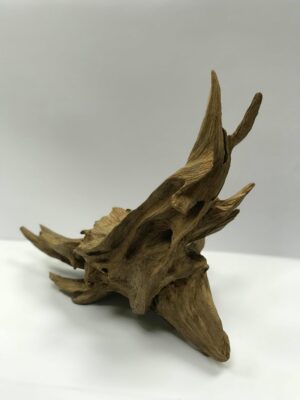
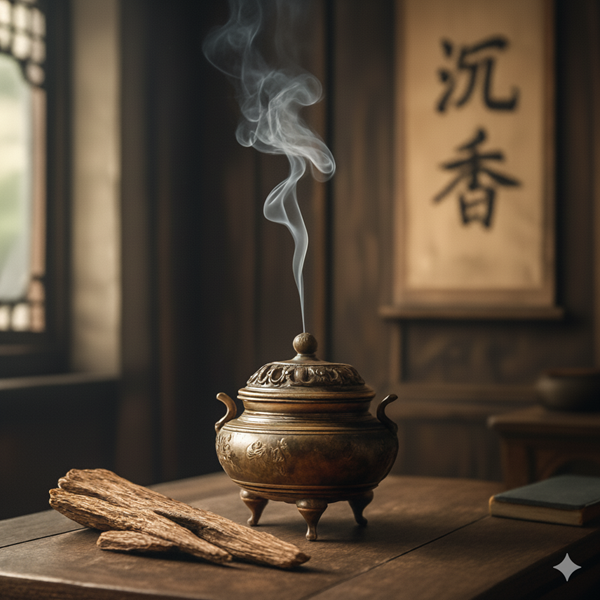
The historical origins of agarwood can be traced back to earliest periods of Chinese history including the pre-Qin era, long before the imperial dynasties came to power.. Agarwood also known as 沉香 (chen xiang). It can be found in ancient records, such as the 本草纲目 (Compendium of Materia Medica) records:
“Agarwood is pungent in flavor, slightly warm in nature, and non-toxic. Its main uses are to treat toxic swelling from exposure to elements and to dispel foul odors.”
During the Tang and Song dynasties, Agarwood became an essential item for scholars, poets, and artist. It is usually celebrated alongside the 琴 qin (zither), 棋 qi (chess), calligraphy, and painting as a hallmark of a refined life. These represented both leisure and deep contemplation for those who saw Agarwood as an embodiment of their ideals.
The Song dynasty poet Su Shi once wrote, “Fine Agarwood rivals the rarest cypress; the Boshan censer warms a jade pavilion in spring.” This highlights the significant place Agarwood held in the lives of scholars at the time. In the Ming and Qing dynasties, Agarwood became an exclusive luxury for the imperial court and nobility. It is accessible only to high-ranking officials and aristocrats.
Agarwood and Buddhist Practice
The historical origins of agarwood continued in Buddhist practice. Agarwood holds an extremely important position. Buddhism teaches that Agarwood can purify the body and mind, aid in achieving meditative concentration (samadhi). It is considered the “King of Incense.” The 华严经 Avatamsaka Sutra mentions:
“Good sons, this incense is offered with the wish that all sentient beings may sever their vexations and cultivate the Bodhi path.”
In temples and meditation halls, Agarwood is burned during ceremonies, prayers, and periods of deep reflection. The act of lighting Agarwood incense transforms the atmosphere, encouraging presence, quietude, and a retreat from the distractions of the world.
The fragrance, delicate and persistent, is uniquely suited to extended meditation and contemplation. This character is unlike stronger incenses which may overwhelm the senses or fade quickly.
Buddhist teachings associate Agarwood’s scent with the process of spiritual purification and the cultivation of concentration. It makes an indispensable element in the monastic life and in the layperson’s practice.
Zen meditation and other branches of Buddhist cultivation frequently involve the ritualized use of Agarwood. The intention that its aroma will settle the mind, focus the spirit, and facilitate access to deeper states of thought and insight.
The value placed on Agarwood in such contexts underscores its spiritual gravity. It is not merely a pleasant aroma, but a medium through which practitioners strive for clarity, discipline, and compassion.
The Modern Inheritance of Agarwood Culture
The inheritance of Agarwood has continued into the present day, rejuvenated by contemporary interest in both tradition and innovation. In modern China and throughout much of East Asia, Agarwood is revered—not solely for its rarity, but for the deep cultural connotations it embodies.
The practice of incense appreciation, incense ceremony performances, and dedicated gatherings reflect a commitment to reviving. It is not just the ritual aspects, but the aesthetic and communal experiences centered on Agarwood.
Modern practitioners are re-imagining Agarwood use, blending ancient ceremony with new forms of expression and technology. Appreciation societies and cultural programs celebrate Agarwood through lectures, exhibitions, experiential sessions, inviting both seasoned adepts and newcomers. They explore its history, botany, fragrance, and symbolic importance.
These events create spaces for collective reflection, learning, and connection, carrying the ancient tradition forward into the rhythm of contemporary life.
The reemergence of Agarwood culture demonstrates a growing desire to integrate mindfulness, heritage, and artistry into everyday living. In doing so, it bridges the temporal gap between the regal exclusivity of the Ming and Qing courts, the spiritual depth of Buddhist worship, and the communal, creative spirit of today.
Agarwood continues to inspire personal growth and collective renewal, a living symbol of refinement, beauty, and spiritual aspiration.